

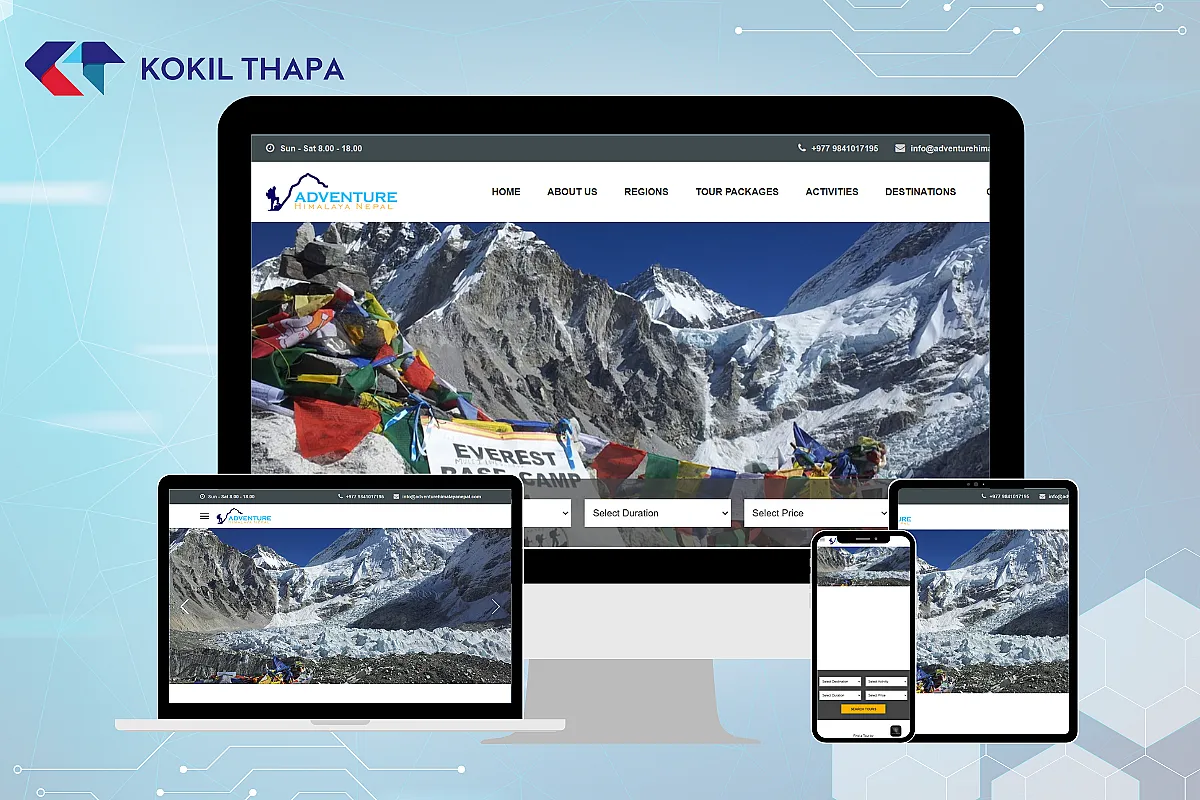
Adventure Himalaya Nepal — Competing On The One Thing Resellers Cannot Fake
The Problem
Everest Base Camp, Annapurna and Langtang are the most contested products in Nepali tourism. Hundreds of operators sell the identical itinerary, and a trekker in Germany or Australia has no way to tell which of them will actually run the trek and which is an agency that will hand the booking to someone else.
Pricing is where the doubt concentrates. The trade quotes a headline figure and leaves out permits, domestic flights, porters or the nights in Kathmandu, so comparing two quotes is impossible and every trekker suspects the cheap one of hiding something. They are usually right.
What We Built
A site that leads on clear pricing, small groups and local guides — chosen because they are the three claims a reseller cannot make truthfully, so stating them plainly does competitive work rather than decorative work.
Packages are organised into the legendary treks and, separately, cultural, city and heritage tours — two genuinely different buyers, one booking three weeks of walking and the other filling two days either side of a flight. A blog carries the practical questions: seasons, permits, altitude, what to pack.
The Decision That Shaped It
Being a local operator is stated as fact rather than atmosphere. In a market where the visible competition is largely intermediaries, “trusted local guides” is not a slogan but the answer to the trekker’s actual question — who will be on the mountain with me — and it is checkable in a way that “award-winning” is not.
What It Does
- Trekking packages across the Everest, Annapurna and Langtang regions
- Cultural, city and heritage tours as a separate track for short-stay visitors
- Clear pricing and small groups stated as the positioning, not buried in an About page
- A blog covering seasons, permits and preparation — the pre-booking research phase
- Content management, so packages and departures are maintained without a developer