

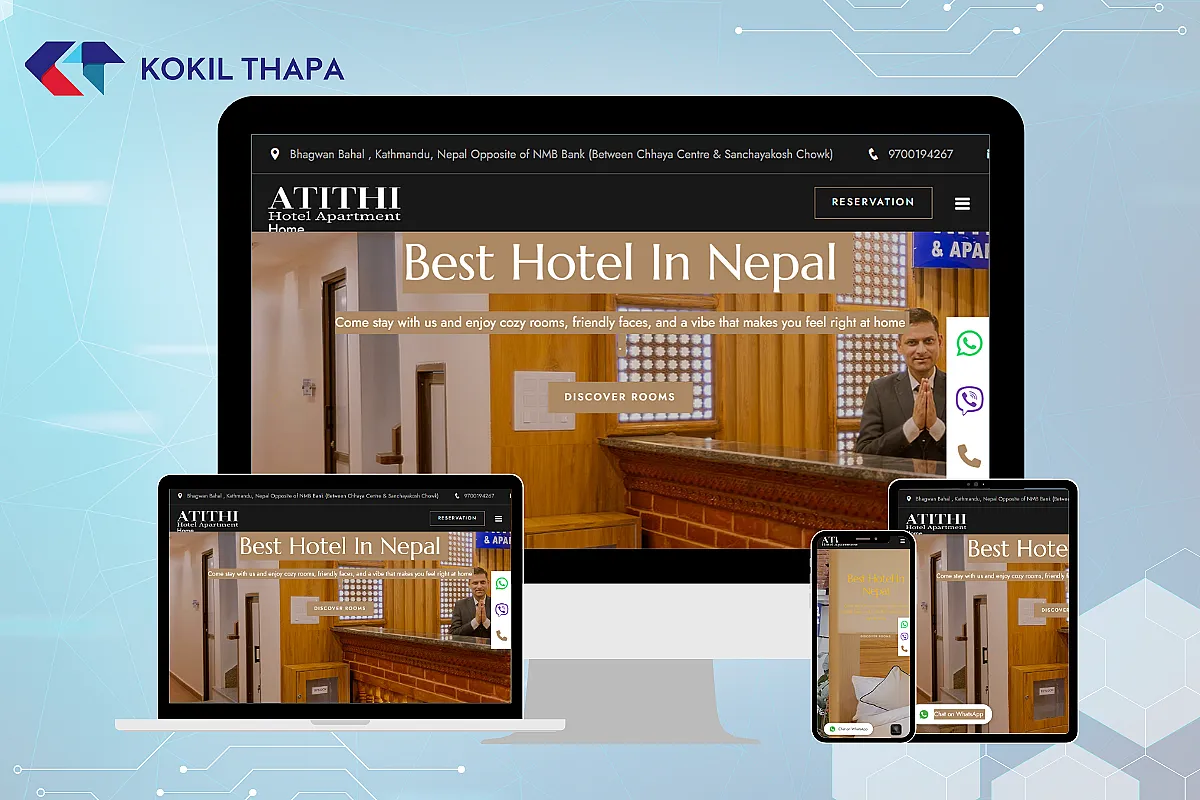
Atithi Hotel & Apartment — Taking The Booking Back From The Platforms
Visit site: atithihotelapartment.com · web developer in Nepal
The Problem
A hotel in Thamel is discovered on an online travel agent, and every booking that arrives that way costs a commission and delivers a guest the hotel has no direct relationship with. The platform owns the customer, sets the comparison terms, and takes a cut of every future stay.
Most hotel websites in this position make the problem worse. They describe the property warmly, show no prices, and offer an enquiry form — so a traveller who is ready to book cannot, and goes back to the platform where the rate and the availability are visible. The site becomes advertising for the intermediary it is meant to bypass.
What We Built
Room types with nightly rates published in USD — deluxe double at $30, king and twin at $50 — and a direct reservation route, so the traveller who arrived here can complete the decision here.
Studio apartments are presented alongside the rooms, because a two-week visitor and a two-night visitor are different buyers, and rooftop dining and the Thamel location are given the prominence they earn: in that district, walkability to everything is the product.
The Decision That Shaped It
Prices are in USD, not rupees. The guest is comparing this against platform listings quoted in their own terms, and asking them to convert is asking them to leave. It is a small thing that decides whether the direct channel is usable at all, and most hotel sites in Nepal get it wrong.
What It Does
- Room types with published nightly rates in USD, not a rates-on-request form
- Studio apartments alongside rooms, for longer stays
- A direct reservation route, so the booking need not go through a platform
- Rooftop dining and amenities presented as part of the offer
- Thamel location made central, because location is the purchase in that district