

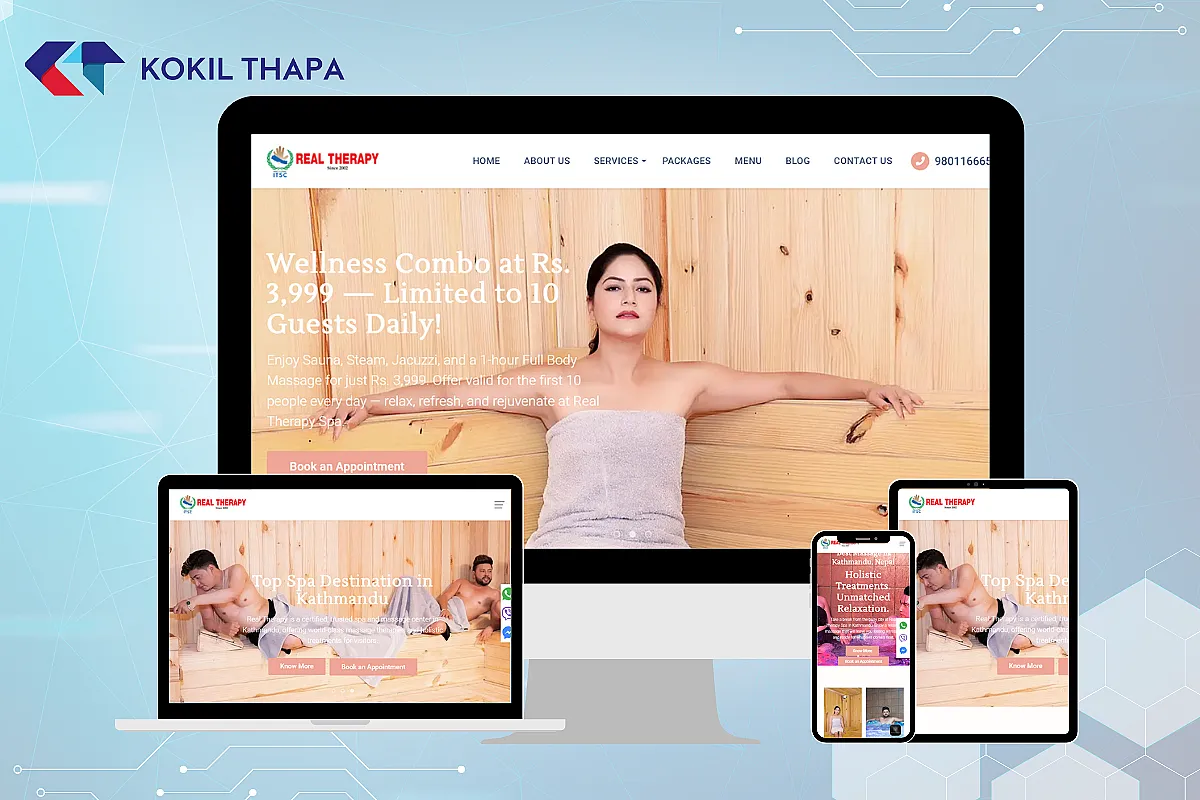
Nepal Massage — The Category-Search Half Of A Two-Domain Strategy
The Problem
Two completely different people arrive at a spa business online. One already knows the name and wants to book. The other is a tourist in Thamel or a resident with a sore back typing “massage in Kathmandu”, who has no brand in mind and is choosing in the next few minutes.
A single brand-led site serves the first well and the second badly. The category searcher wants to know what treatments exist, what they cost and whether they can walk in — and a homepage built around a brand story makes them work for all three, so they leave and try the next result.
What We Built
The category-intent site of a two-domain estate for the same business, aimed squarely at people searching the treatment rather than the name. It leads with packages and prices — a wellness combo at Rs. 3,999, limited to ten guests daily — and with the treatment menu itself: Ayurvedic, deep tissue, Swedish, hot stone, jacuzzi, steam and sauna, each with its own page.
Trust is carried by things a first-time visitor can check: operating since 2002, and Google reviews surfaced on the page rather than quoted selectively.
The Decision That Shaped It
The price is published and the daily limit is stated with it. Spas conventionally hide prices to protect the upsell, which costs them the walk-in who was deciding between three options on a phone. Naming the number wins that visitor, and the ten-a-day limit makes it a real offer rather than a permanent discount nobody believes.
What It Does
- A page per treatment, matching the specific search rather than one services list
- Packages with published prices and a stated daily limit
- Facilities — jacuzzi, steam, sauna — named alongside the massage menu
- Google reviews on the page, for a visitor with no prior knowledge of the business
- Since-2002 longevity stated as the credential a tourist can weigh