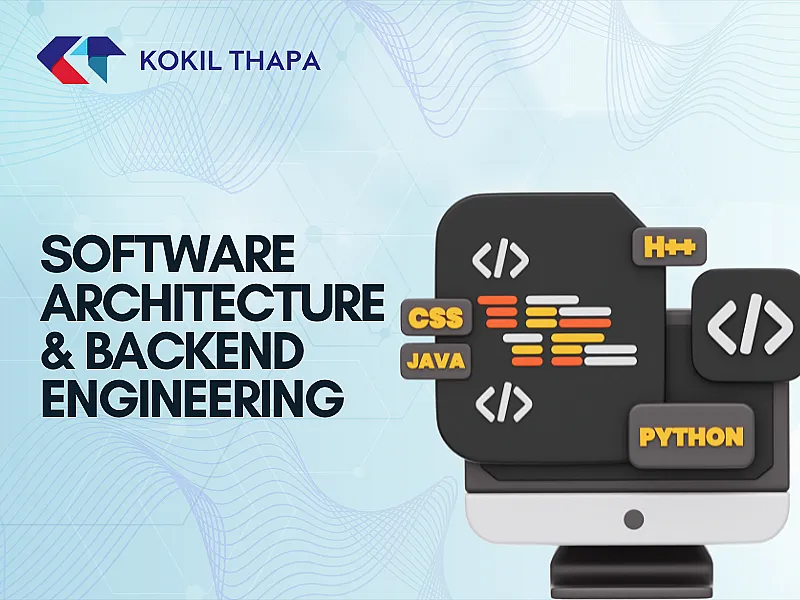
Software architecture and backend engineering form the backbone of every modern digital product. Whether you're building a small internal tool, a large-scale SaaS platform, a mission-critical enterprise system, or a globally distributed application, the quality of your architecture determines the reliability, performance, scalability, and long-term sustainability of your software. This category is dedicated to helping developers, architects, and technical founders master the principles, patterns, and practices that shape world-class backend systems.
In today's technology landscape, backend engineering is far more than writing server-side code. It involves designing clean domain boundaries, managing data efficiently, structuring layers logically, integrating external systems securely, and ensuring that applications can scale gracefully under high load. The articles in this category explore a wide range of topics, including system design fundamentals, clean architecture principles, microservices vs. monolith decisions, database architecture, caching strategies, distributed systems, and high-performance server optimizations.
A central theme in this category is modern software architecture patterns. Developers will gain insights into techniques like Domain-Driven Design (DDD), Hexagonal Architecture, CQRS, event-driven systems, API-first development, and modular monoliths. These patterns help teams build applications that are easier to test, maintain, extend, and scale. By understanding the trade-offs of each architectural approach, engineering teams can make informed decisions that fit their application's goals and performance requirements.
Backend engineering also demands mastery of databases and storage systems. Articles here highlight database modeling best practices, indexing techniques, sharding, replication, partitioning, and query optimization. Readers will find practical guides covering relational databases like MySQL and PostgreSQL, as well as NoSQL solutions such as MongoDB, Redis, Cassandra, and Elasticsearch. These resources are crafted to help developers reduce bottlenecks, improve query performance, and architect storage systems that meet both transactional and analytical needs.
This category also explores API architecture and communication patterns—a cornerstone of modern software. Developers will learn about RESTful API design, GraphQL, WebSockets, authentication workflows, rate limiting, API gateways, and secure communication between microservices. With real-world examples and best practices, the content ensures that your APIs are not only functional but also safe, performant, and easy to integrate.
Scalability and performance are major pillars of backend engineering, and this category provides actionable techniques for achieving both. You’ll find strategies for horizontal scaling, load balancing, container orchestration with Docker and Kubernetes, queueing systems with Redis or RabbitMQ, and asynchronous processing for high-load environments. Each topic focuses on practical engineering solutions used by modern tech companies to build resilient and distributed backend systems.
Security is another essential component of backend development. This category includes detailed guidance on secure coding, encryption, authentication, authorization, API token management, OWASP standards, audit logging, and infrastructure-level security. As cyber threats increase, backend engineers must stay proactive and informed—this section ensures that you have the tools and knowledge needed to protect your applications and users.
Finally, the category emphasizes the importance of clean code and maintainability. Topics such as refactoring, design patterns, code review workflows, technical debt management, and documentation practices help developers write backend systems that age gracefully rather than degrade over time.
Whether you're an experienced architect or an aspiring backend developer, this category serves as your go-to resource for building powerful, scalable, and future-proof applications. For deeper insights and practical engineering guidance, you can also explore content shared by an experienced web developer in Nepal who builds high-performance systems and modern backend architectures for real-world applications.
Software Architecture & Backend Engineering's Blogs

August 15, 2026
10 min read
Database Sharding Explained with Real Example
Database sharding explained with real example patterns for Laravel and MySQL, covering when to shard, key selection, and operational trade-offs in 2026.

August 15, 2026
10 min read
Modular Monolith with Laravel Complete Guide
This Modular Monolith with Laravel Complete Guide shows how to structure scalable, maintainable PHP applications using domain-driven modules in 2026.
August 15, 2026
11 min read
Database Restore Testing You Should Actually Do
Database restore testing you should actually do ensures your backups work when disasters strike, covering integrity checks, application validation, and automated verification.
August 15, 2026
9 min read
MySQL Binary Logs for Replication and Backup
Configure MySQL binary logs for replication and backup with production-tested settings, retention policies, and recovery commands for Laravel and PHP applications.
August 12, 2026
9 min read
Symfony API Platform for REST and GraphQL
Learn how to configure Symfony API Platform for REST and GraphQL in 2026 with real PHP 8.4 examples, security patterns, and performance tips from production use.

August 12, 2026
9 min read
Symfony Messenger for Async Processing
Implement Symfony Messenger for async processing to offload slow tasks, improve response times, and build reliable background job systems in PHP 8.4 applications.